At midnight we were out in the wilderness, in a small van, somewhere between Puno and Juliaca. Fortunately it was almost full moon, as there was no artificial lighting at all. The landscape also looked like a moonscape, bare, barren and strewn with rocks. There was no road as such, simply dirt tracks in between the boulders. The two other passengers with us were getting desperate, and one of them began crying, as the driver lost his way several times, every time having to turn back as it was impossible to progress further. At one point, while climbing up a hill, we came upon four horses barring the way. It was almost surreal, seeing four horses appear before us in this desolate place. It turned out there was a campesino (a common name for a subsistence farmer in South America) living close by, complete with a barking dog. This encounter was fortunate, as the campesino pointed out the correct way. After some more driving on the moonscape, we came upon a small lake, with a rural community on its shore, and eventually on to a good metalled road to Juliaca.
The reason for this detour from the main road was because of a strike, or protest, by the campesinos, apparently against an increase in taxes and transport costs. They were putting up roadblocks on the main roads and stopping any transport from getting through. We wanted to leave Puno, a town on Lake Titicaca, to get to Cusco, the ancient Inca capital. However, the three-times weekly train was not operating because of the stoppage, and the drivers of the regular buses were afraid, or could not, operate. Later on we saw why! Eventually a travel agent offered us tickets on what she described as a luxury bus that she said would come from Cusco, so it would not be affected. Later we found out that this must have been either an outright lie, or the travel agent was out of touch with reality! We were meant to catch this bus in the morning, so we settled in for dinner and a good night's rest, after having been to Taquila island out on Lake Titicaca. However, at about 9:30pm, the travel agent and a driver came for us in a small van, a sort of minibus, telling us that we had to leave right away in order to get to Juliaca, about 30 km from Puno on the Pan-American Highway to Cusco. They said that if we leave it till the morning we would not get through. So, bemoaning the loss of a good night's sleep, but reasoning that we had no choice if we wanted to leave Puno quickly, we got ready and left, on what we thought would be a nice comfortable journey on the Pan-American Highway.
On the outskirts of Puno, we met our first roadblock - a line of burning tyres completely blocking the road, with a few people around it. As soon as he saw this roadblock, our driver took a minor road to the left, meaning to bypass the roadblock using side roads. And that is what led us to the moonscape at midnight.
The adventure did not stop when we got back on the metalled road to Juliaca. On arriving at Juliaca, at about 2 am, we transferred on to a large coach, the supposed luxury coach described by the travel agent. However, the coach did not leave straight away, but waited till daybreak. And this was in the Peruvian altiplano at night, at an altitude of about 13,000 feet. So it was bitterly cold, around -10 degrees Celsius inside the bus. The locals are used to these temperature extremes, and they carry a blanket or two with them to use at night. But we did not have any blankets, and the bus apparently did not have any heating, even with the engine started. Eventually I borrowed a blanket from the driver.
When the bus left, heading northwest to Cusco, it did not take long before we met the first of many roadblocks. These crude roadblocks, put up by campesinos, the local farmers, consisted of several large boulders strung across the road, along with piles of earth. Our bus, along with two other buses, stopped, and the driver went out to negotiate with the campesinos manning the roadblock. Many of these campesinos were the typical Andean women, dressed in voluminous folds and their typical bowler hat. Their skin was parched, dry and prematurely aged, because of the sun and the dry thin air. In these negotiations, even though it seemed that there was a male leader, the women were usually the most vociferous and militant.
Manning the barricades
 Combative campesinos
On one of the other buses there was a French-Canadian whom we immediately nicknamed “Indiana Jones”. He was dressed in brown leather pants, with matching brown waistcoat, and a leather hat with flaps covering the ears. After some time at the roadblock, Indiana Jones left the bus and started arguing with the leader of the campesinos, using fluent Spanish. The discussion became more heated and the Canadian began challenging them to a fight. There was no reaction from the campesinos, however, which was probably fortunate! Eventually, after a couple of hours at this roadblock, we were “allowed” to remove the boulders ourselves. Obviously we were pleased to be on our way, however, only a few kilometers away we met the second roadblock!

Indiana Jones
The same routine started again, discussions and heated arguments, until eventually we were allowed to remove the roadblock and continue on our way. This happened so many times, maybe five or six times, that I lost track. At one of the roadblocks, a couple of police officers arrived, and we thought, “Ah, now all will be OK”. However, the police did not order the strikers away, but simply tried to negotiate with them. They did not win the argument and eventually left! So it simply took longer until we were allowed to remove the roadblock. In the end, these roadblocks lost their novelty and merely became a great nuisance. I really could not see what the campesinos were getting out of it, as they were only annoying us visitors, and not harming the people they wanted to get at.
Unfortunately for travellers, strikes and protests are becoming more frequent in Peru. Some of the recent protests were against the signing of a free-trade agreement with the US. More usually, the strikes and protests are of a localised nature, for example in the Cusco area the protesters want a larger cut of the tourist revenue. And protests are usually accompanied by roadblocks - they seem to be a popular protest weapon in Peru. However, modern Peru is a far cry from the days of the Sendero Luminoso (Shining Path), the Maoist guerrilla movement. Since the capture of its leader, Abimael Guzman, in 1992 (see the film, The Dancer Upstairs), it has only been sporadically active, and despite occasional bursts of activity in localised areas, it is a far cry from its heyday. The major aggravations nowadays, apart from the petty thieves, are the protests. But Peru has a lot more to offer than strikes and protests!

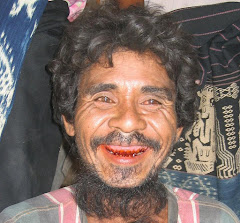
Children of the Andes
There is obviously the magnificent and famous Machu Picchu, called the Lost City of the Incas, because the American Hiram Bingham “rediscovered” it in 1911. This is the most-visited place in the whole of South America. There are two ways of getting there from Cusco: the famous Inca Trail or the easier train. If you are planning on the Inca Trail, make sure that you book well in advance, as only a limited number of trekkers are allowed on the trail. And it is closed at certain times of the year for maintenance, usually around February, in the rainy season.

The face of Machu Picchu
 Machu Picchu
When visiting Machu Picchu, plan for an overnight stay in Aguas Caliente (officially renamed Machu Picchu Pueblo, although I did hear anyone using the new name). Apart from being more relaxed, this will also give you time to walk up Mount Putukusi, a sacred mountain close to Aquas Caliente, set across the valley from Machu Picchu itself. The walk is aided by high rough ladders (one of them with 120 steps) in the vertical parts, so it is a very enjoyable climb.

Climbing Mt Putukusi
Cusco itself, the ancient Inca capital built in the form of a puma, is a fascinating place. In the main square, it is easy to imagine the violence this place has seen. The Inca leader Tupac Amaru I was beheaded here in 1572 for rebelling against the Spanish conquistadores. The Spaniards set the Inca’s head aloft on a pike for all to see, but soon buried the relic when they discovered that a multitude assembled every night to worship it in silence.
Even though the Spaniards killed Tupac Amaru I and his son, a daughter survived, and, 200 years later, in 1780, a direct descendant assumed the name Tupac Amaru II and led a great rebellion that came close to ending Spanish rule. However, this was not to be, and Tupac Amaru II was cruelly executed, together with his family, in the same square that had witnessed the death of his great-great-grandfather two centuries before. He was forced to watch as his wife, uncle and eldest son had their tongues torn out and subsequently garroted. The Spaniards reserved a special fate for the Inca himself: his limbs were attached to horses, which were then spurred in four directions. But the Inca’s body resisted this symbolic rending of the Inca empire. He was returned to the gallows, where he was disemboweled while still alive and then hacked to pieces. The bodies of the executed Incas were then dispersed throughout the rebellious provinces.
Today’s Cusco is a mix of Inca and Spanish architecture. In fact, some of the Spanish buildings were built on dismantled Inca temples, like the Church of Santo Domingo, built on the Koricancha Temple (Temple of the Sun). This is indeed a great pity, as Inca walls are some of the most impressive I have ever seen. The stones, some of them massive, are irregularly shaped, and interlaced one into the other, so that they fit like dovetails, matching so well that not even a knife blade will enter the cracks. One particular stone, probably the most photographed stone in the world, has twelve edges!

Wall at Hatun Ramiyok, Cusco
Other Inca sites near Cusco are Chincero, the fortress of Saqsayhuaman, and the town of Ollantaytambo, all magnificent examples of Inca architecture. Then there are the salt pans at Maras, built by the Incas and still being used by a local cooperative. These are fed by a natural underground salty river. For me, seeing salt pans at around 10,000 feet was an impressive sight!

Salt Pans at 10,000 feet
Of course Peru is not just about the Incas. There is Lake Titicaca, the highest commercially navigable lake in the world, at 3821 metres (12,536 feet) above sea level and with an area of approximately 8,300 square kilometers (twenty-six times the size of the Maltese islands). In fact, the Bolivian military uses the lake to carry out naval exercises, maintaining an active navy despite being landlocked! I had seen this lake from the Bolivian side, having visited the Island of the Sun and the Island of the Moon. Now, from the Peruvian side, we visited the Los Uros floating islands, built of totora reeds, on which a community of Uros people still live. The Uros originally created these artificial islands to escape the Inca, who dominated the mainland at the time. About 3000 descendants of the Uros are alive today, but only a few hundred still live on the islands. And some of them have modern amenities, such as radios, powered by solar panels.

Los Uros
 Uros lady
We also visited Lake Taquile, about 45 km offshore from Puno, whose inhabitants are known for their old community lifestyle and handwoven textiles and clothing.
Then there is Colca Canyon, that, at a depth of 10,725 ft (3,269 m) is almost twice as deep as the US Grand Canyon. If you get there in the early morning you will certainly see the huge Andean condor (Vultur Gryphus) hovering high above the canyon floor. The Andean condor is one of the largest flying birds with a wingspan ten feet across and is also an endangered species. As you will be on the sides of the canyon, the condors will be at eyelevel or even below you, giving you an unparalleled close view.

Andean Condors at Colca Canyon
In the Pacific coast, just off Pisco, there are the amazing Islas Ballestas, situated in the Paracas National Reserve, or the Peruvian Galapagos. You cannot land on the islands, but a boat will take you very close to the shore. The islands are covered with guano (bird droppings), highly prized as a fertilizer, and harvested when it reaches several metres depth. In the past, guano was a strategic commodity, in fact, the War of the Pacific between the Peru-Bolivia alliance and Chile was partly based upon Bolivia's attempt to tax Chilean guano harvesters.
On the islands you will see tons of birds, including pelicans, flamingos, penguins, cormorants, red boobies and terns, that seem to cover every inch of land. Thousands of birds fly in formation just over the water. You will also see sea lions and dolphins, and there are also supposed to be whales and turtles, although we did not see any. What you see is more than enough though!

Sea lions-Islas Ballestas
In Peru one can also get a feel of the Peruvian Amazon, usually reached from Iquitos, a jumping-off point for tours of the Amazon jungle and trips downriver to Manaus in Brazil. Iquitos, like Manaus, had an economy based on the rubber industry, until this industry came to an end when rubber trees were smuggled out of the country and planted in Asia.
From this brief description, it is evident that Peru offers something for everyone, and is well worth a visit. If you do go, plan carefully and keep a close watch on the news. Strikes are quite frequent. Keep yourself updated, as there will certainly be a lot of change in Peru.


 The Cao Dai Temple
 The famous Austin

 Halong Bay